

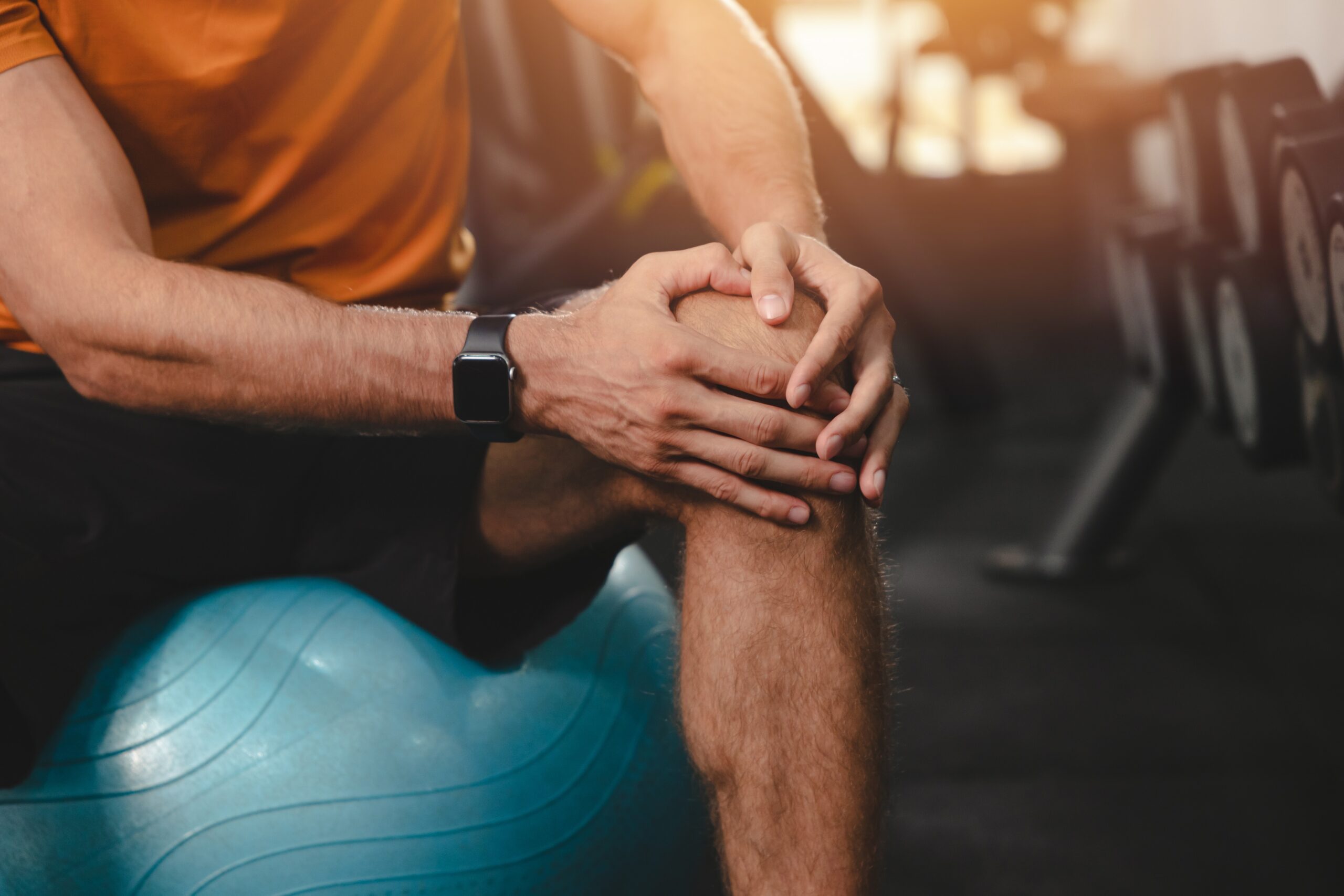
Patella Tendon Pain: What It Is, Why It Happens, and Why You Shouldn’t Ignore It
A sharp, localised ache just below the kneecap that flares up with jumping, squatting, or going down stairs is one of the most recognisable patterns in sports medicine. It’s commonly known as “jumper’s knee”, but the clinical name is patella tendinopathy — and despite how common it is, it’s a condition that’s frequently misunderstood, under-treated, and left to become a long-term problem simply because people try to manage it themselves rather than getting it properly assessed.
Understanding what’s actually happening inside the tendon, why it develops, and why it behaves so differently from a typical muscle strain, makes it much easier to see why early, structured treatment matters so much.
What Is the Patella Tendon, and What Goes Wrong?
The patella tendon connects the bottom of the kneecap (patella) to the top of the shin bone (tibia), forming a key part of the extensor mechanism that allows you to straighten your knee forcefully — exactly the action involved in jumping, landing, sprinting, and change of direction. It’s a remarkably strong structure, but it’s also subjected to enormous repetitive load in sports involving jumping and rapid deceleration, such as basketball, volleyball, football, and athletics.
Patella tendinopathy isn’t inflammation in the traditional sense, despite often being described that way. It’s a failed healing response within the tendon: repeated loading causes small amounts of damage to the collagen fibres that make up the tendon, and under normal circumstances the tendon repairs this damage between sessions. When the rate of loading outpaces the tendon’s capacity to repair itself, the tissue starts to break down faster than it can rebuild, leading to disorganised collagen structure, increased water content, and the ingrowth of small blood vessels and nerves — which is a significant part of why the area becomes painful.
What Usually Causes It?
Patella tendinopathy is very rarely caused by a single incident. It’s a classic overuse injury, developing gradually as a result of the tendon being loaded beyond its current capacity to tolerate that load, repeatedly, over time. Common contributing factors include:
- A sudden increase in training volume or intensity — particularly more jumping, sprinting, or plyometric work than the tendon has been conditioned for
- Poor landing mechanics, such as landing stiffly with minimal knee bend, which increases the force transmitted directly through the tendon
- Reduced quadriceps and hip strength, meaning the tendon has to absorb more load because the surrounding muscles aren’t sharing it effectively
- Training surface and footwear, with harder surfaces generally increasing load through the tendon
- Insufficient recovery time between high-load training sessions, not allowing the tendon enough time to adapt
Because the damage accumulates gradually, many people notice a period of mild, easily ignored discomfort — often described as “just a bit of stiffness” after training — for weeks or even months before it develops into the persistent, activity-limiting pain that finally prompts them to seek help.
Why You Shouldn’t Just Rest and Hope It Settles
Tendons behave quite differently from muscles, and this is where a lot of well-intentioned self-management goes wrong. With a muscle strain, rest genuinely allows healing, and a gradual return to activity is usually enough to resolve things. Tendons, on the other hand, don’t respond well to complete rest either — some load is actually necessary to stimulate the tendon to remodel and strengthen appropriately. Too little load, and the tendon can become deconditioned and poorly tolerant of activity when training eventually resumes; too much, and the damage continues to outpace repair.
This is precisely why “resting until it feels better, then going straight back to the same training” so often fails with patella tendinopathy. The pain may ease with rest, but the tendon’s underlying capacity hasn’t actually improved — so the same load that caused the problem originally causes it again, often within a few sessions of returning. Left unaddressed for long enough, patella tendinopathy can become a chronic, persistent problem that’s considerably harder to resolve than if it had been treated properly from the start, sometimes requiring many months of rehabilitation rather than weeks.
Ignoring it also risks compensations elsewhere — favouring the other leg, altering movement patterns to avoid pain — which can create secondary issues at the hip, other knee, or lower back over time.
How Physiotherapy Helps
Effective treatment for patella tendinopathy is built around progressive, carefully dosed loading — giving the tendon exactly the right amount of stimulus to remodel and strengthen without tipping back into overload. This typically starts with isometric exercises, which can help reduce pain fairly quickly while maintaining some strength through the tendon, before progressing through heavier, slower resistance work, and eventually into more sport-specific work involving landing, jumping, and rapid deceleration, matched to the demands of the person’s sport. Each stage is only progressed once the tendon is coping well with the current load, rather than on a fixed timeline — which is part of why working with a clinician, rather than following a generic programme, makes such a difference to the outcome.
Alongside this, a physiotherapist will look at the contributing factors identified in assessment — addressing quadriceps and hip strength deficits, reviewing landing mechanics, and guiding a sensible return to training load, so the rehabilitation actually resolves the underlying cause rather than just easing the current flare-up.
For tendons that are particularly stubborn or slow to respond to loading-based rehab alone, we often recommend a course of six shockwave therapy sessions alongside the exercise programme. Shockwave therapy uses focused acoustic wave pulses delivered directly to the tendon, which has been shown to help stimulate the tendon’s healing response, encourage the formation of healthier collagen, and reduce pain — giving the rehabilitation exercises a better foundation to build on. It’s typically delivered once a week for six weeks, and works well as a complement to loading exercises rather than a replacement for them, particularly for tendons that have been symptomatic for a longer period or haven’t responded as expected to exercise alone.
The Bottom Line
Patella tendon pain is common, well understood, and genuinely treatable — but it needs the right kind of treatment, delivered in the right way, to actually resolve rather than just quieten down temporarily. Because tendons respond so specifically to load, generic rest or a poorly dosed exercise programme can leave the underlying problem untouched, setting the stage for it to become a long-term, recurring issue.
If you’ve got pain below the kneecap that flares with jumping, squatting, or stairs, and it’s been hanging around longer than a couple of weeks, that’s a sign it’s worth getting properly assessed rather than waiting for it to resolve on its own. A structured rehabilitation programme — with shockwave therapy alongside it where appropriate — gives the tendon the best possible chance to fully recover and get you back to full training with confidence.