Elbow Pain Explained: Tennis Elbow vs. Golfer’s Elbow
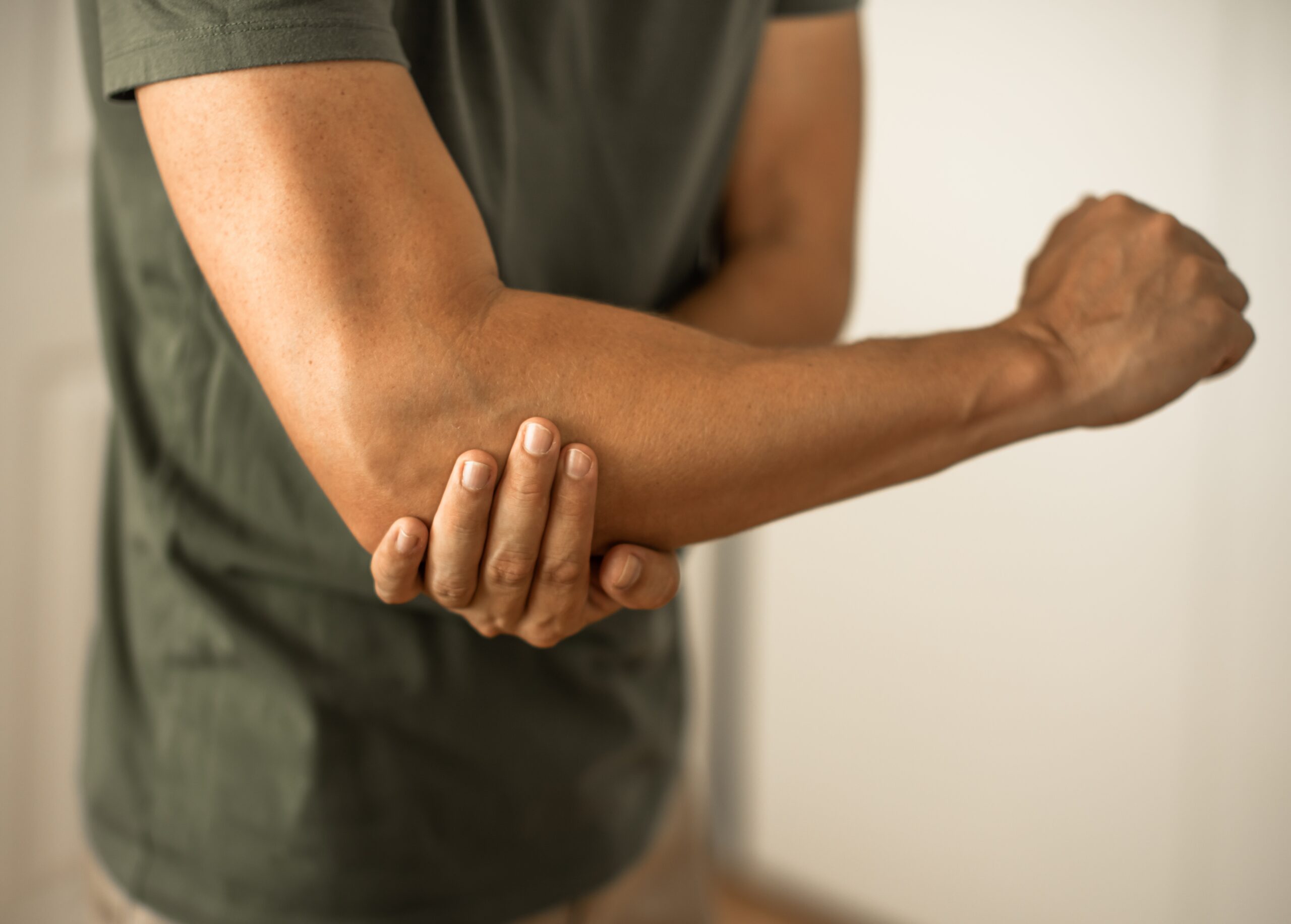
Elbow pain is one of those complaints that often gets misjudged before it’s even assessed. Someone who’s never picked up a tennis racket assumes they can’t possibly have “tennis elbow,” while a golfer with pain on the outside of their elbow wonders why it doesn’t match what they’ve read about “golfer’s elbow.” The truth is, these names are misleading. Both conditions are common in people who’ve never touched a club or racket in their lives, and understanding the real difference between them is the first step toward proper treatment.
Two Conditions, One Joint
Tennis elbow and golfer’s elbow are both forms of tendinopathy — overuse injuries affecting the tendons that attach to the bony bumps on either side of your elbow. The difference comes down to location and which muscles are involved.
Tennis elbow (lateral epicondylitis) affects the tendons on the outside of the elbow. These tendons connect to the muscles responsible for extending your wrist and fingers — the ones you use when you lift your hand up, as if signalling “stop,” or grip something firmly with your palm facing down.
Golfer’s elbow (medial epicondylitis) affects the tendons on the inside of the elbow, connecting to the muscles that flex your wrist and fingers — the ones used when you curl your wrist inward or grip with your palm facing up.
Both conditions develop through the same basic mechanism: repetitive strain that outpaces the tendon’s ability to repair itself. Small amounts of damage accumulate faster than the tissue can heal, leading to irritation, weakening, and eventually pain that doesn’t resolve on its own.
How Tennis Elbow Feels and Develops
Despite the name, only a small percentage of people diagnosed with tennis elbow actually get it from playing tennis. It’s far more commonly seen in people who perform repetitive gripping or wrist-extension movements — think tradespeople using screwdrivers or hand tools, office workers who type and use a mouse for hours on end, painters and decorators, or anyone who has recently taken up a new repetitive hobby or job task.
The pain is typically felt on the outside of the elbow, sometimes radiating down into the forearm. It tends to worsen with:
- Gripping objects, particularly with the palm facing down
- Lifting something with a straight arm — even something as simple as a cup of tea or a shopping bag
- Shaking hands or twisting a door handle
- Extending the wrist against resistance
Many people describe it as a burning or aching sensation that becomes sharp with specific movements. Grip strength often noticeably weakens, and simple daily tasks — opening jars, carrying bags, turning a key — become surprisingly difficult.
How Golfer’s Elbow Feels and Develops
Golfer’s elbow follows a similar pattern but on the opposite side of the joint. Again, most cases have nothing to do with golf. It’s frequently seen in people who do repetitive gripping combined with wrist flexion — manual labourers, climbers, throwing athletes, people who use vibrating tools, and those who spend long hours on computer work with poor wrist positioning.
Pain is felt on the inside of the elbow and can radiate down into the forearm and, in some cases, toward the wrist. It typically worsens with:
- Flexing the wrist or making a fist
- Gripping with the palm facing up
- Repetitive throwing or swinging motions
- Pronating the forearm (turning the palm downward) against resistance
Like tennis elbow, it often starts subtly — a mild ache after activity that gradually intensifies until it interferes with everyday tasks and disturbs sleep, particularly if you tend to sleep with your elbow bent.
Why the Distinction Matters
While both conditions share an underlying cause — overloaded tendons that haven’t had time to adapt and recover — treating them effectively requires understanding exactly which structures are affected. Loading the wrong muscle group, or failing to address the actual movement pattern that caused the problem in the first place, can prolong symptoms or lead to reinjury. This is exactly why a proper assessment matters more than guessing based on a name that, frankly, doesn’t tell the whole story.
The Consequences of Ignoring It
As with most tendon-related injuries, elbow tendinopathy has a habit of getting steadily worse if left unaddressed. In the early stages, pain might only appear after specific activities and settle with rest. Left untreated, however, the tendon continues to be loaded beyond its capacity to heal, and several things tend to happen:
The pain becomes constant. What starts as activity-related discomfort can progress to pain that’s present even at rest, disrupting sleep and everyday function.
Grip strength declines further. As the tendon weakens, so does your ability to perform basic tasks — carrying shopping, opening jars, shaking hands, or even holding a pen comfortably.
Compensation patterns develop. People often unconsciously alter how they use their arm to avoid pain, which can lead to secondary issues in the shoulder, wrist, or opposite arm from overcompensating.
Chronic tendinopathy sets in. Tendons that remain under-recovered for months can undergo structural changes that make them considerably more resistant to treatment, often requiring a longer and more intensive rehabilitation process.
Impact on work and daily life. For anyone in a manual job, or who simply relies on their hands throughout the day, ongoing elbow pain can significantly limit capability and, in some cases, force time off work altogether.
How Physiotherapy Can Help
The encouraging news is that both tennis elbow and golfer’s elbow respond very well to physiotherapy, particularly when treatment begins before the condition becomes chronic. Our approach typically includes:
Accurate assessment. Confirming exactly which tendon is affected, ruling out other potential causes of elbow pain, and identifying the activities or movement patterns driving the problem.
Load management. Rather than simply telling you to rest completely (which often isn’t practical, and can lead to deconditioning), we help you modify activity to a level the tendon can tolerate while it heals.
Progressive strengthening. Tendons need the right kind of loading to repair and rebuild strength — this is a cornerstone of modern tendinopathy treatment. We guide you through a structured, progressive strengthening programme targeted at the specific muscle group involved.
Manual therapy. Hands-on techniques can help reduce pain and improve mobility in the surrounding muscles and joints, supporting the overall recovery process.
Ergonomic and technique advice. Whether it’s how you’re using tools at work, your desk setup, or your grip technique in sport, addressing the root cause helps prevent the problem recurring once it’s resolved.
A tailored return-to-activity plan. We’ll work with you to safely build back up to full activity — whether that’s your job, your sport, or simply day-to-day tasks — without risking a flare-up.
Don’t Wait for It to Take Over
Elbow pain that lingers for more than a week or two, or that’s starting to affect your grip strength and daily activities, is worth getting assessed properly rather than hoping it settles on its own. The earlier tennis elbow or golfer’s elbow is identified and treated correctly, the faster and more straightforward the recovery tends to be.
Get in touch to book an assessment, and let’s get your elbow — and your grip — back to full strength.